Selecting proper replacement tires
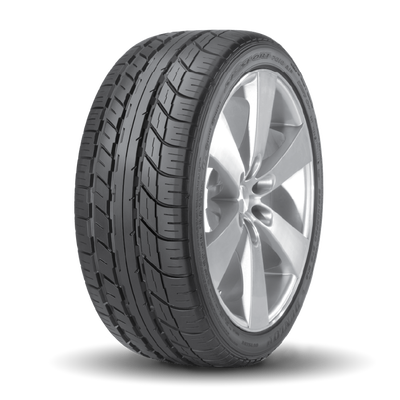
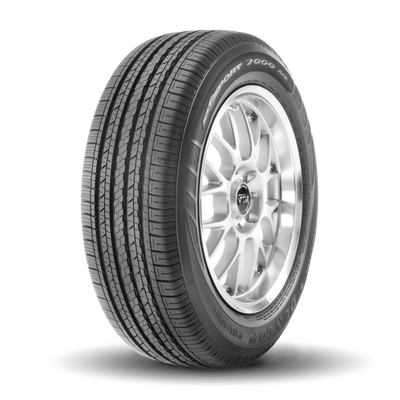
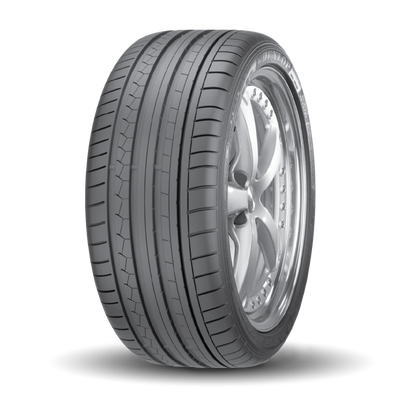
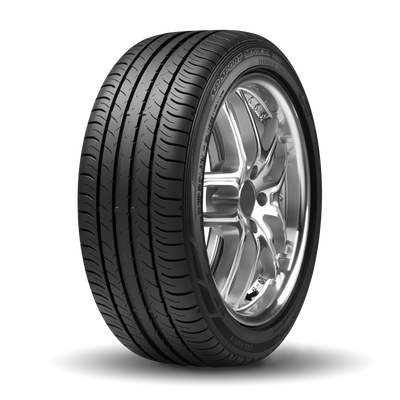
Some tires are designed more for handling and speed while others are engineered for long tread life and soft ride. Dunlop offers many tire lines to provide the most suitable tire for every application. Every Dunlop tire must exceed both federal and strict internal performance test standards. All Dunlop tires provide quality performance characteristics in the vital areas of traction (grip), handling, durability, ride comfort and value. Your Dunlop dealer can assist in selecting the proper Dunlop tires to enhance your vehicle's performance.
Modern passenger car tires have excellent tread life, often achieving more than 40,000 miles. However, in specialized performance tires, treadwear is compromised to gain the benefits of superior handling and grip.
Deep tire treads wear longer, but squirm more than shallow treads. Squirm actually increases tire wear, so any gain in tread thickness gives diminishing returns in tread life. Also, a thick tread increases tire weight, thus increasing rolling resistance and heat, an enemy of tread life. Long tread life is a positive consideration, but it is only one of many criteria for determining a tire's function.
HANDLING
The tire is the only contact a vehicle has with the road surface. The most common tire-to-road contact patch (footprint) is about 4" x 5" or about the size of your hand. A full set of four tires may have a total footprint area about the size of a sheet of paper. Everything a car does - start, accelerate, maneuver, stop - is done through its tire footprint. A contact patch is similar to the image on the right and may have an actual area of about twenty square inches. That's why tire performance is critical to vehicle performance and safety.
Like most vehicle components, tires have undergone a continual design evolution. The greatest improvements have been in handling characteristics. Years ago, a 92 aspect (sidewall height to width) ratio tire was typical, an 82 series tire was considered 'low
profile' and a 70 series tire was the hot setup. Now 70 series tires are common, and many cars carry 60, 55, 50, and even 40 series tires. Exotic fitments today are possible with 30 series tires. (Remember, tire clearance, load capacity and performance suitability for the vehicle are critical considerations.)
For a car to continue to benefit from the performance that was engineered into it, replacement tires should match the original fitment size. Upgrades start from the OE tires. Your Dunlop dealer can discuss tire replacement for your vehicle.
Tires with wider treads and lower aspect rations can improve a car's handling capabilities. These tires take advantage of suspension systems engineered to keep the tire upright in corners and straight-ahead when going over uneven road surfaces.
TRACTION
Today's tire tread patterns and compounds are engineered for a variety of traction requirements such as: high performance cornering, wet grip, all-season or mud, snow and ice capability; and wet handling characteristics.
ENDURANCE/SPEED
Vehicle manufacturers have improved engine efficiency to meet emission regulations and fuel economy standards as well as customer demand for performance. At the same time, vehicles are more aerodynamic and gear ratios are selected to maximize fuel economy. As a result of these changes, the top speed of new cars, particularly performance models, has increased greatly. This has created the necessity for tires designed to match those speeds and handling capabilities.
These high performance and ultra-high performance tires are also engineered to work with sophisticated suspensions to deliver improved handling at high speeds and traction. Do not downgrade speed rated tires with replacement tires that don't match the vehicle's performance capabilities. Downgrading of this nature cases detrimental effects on tire performance, i.e., handling response and durability.